
Jan
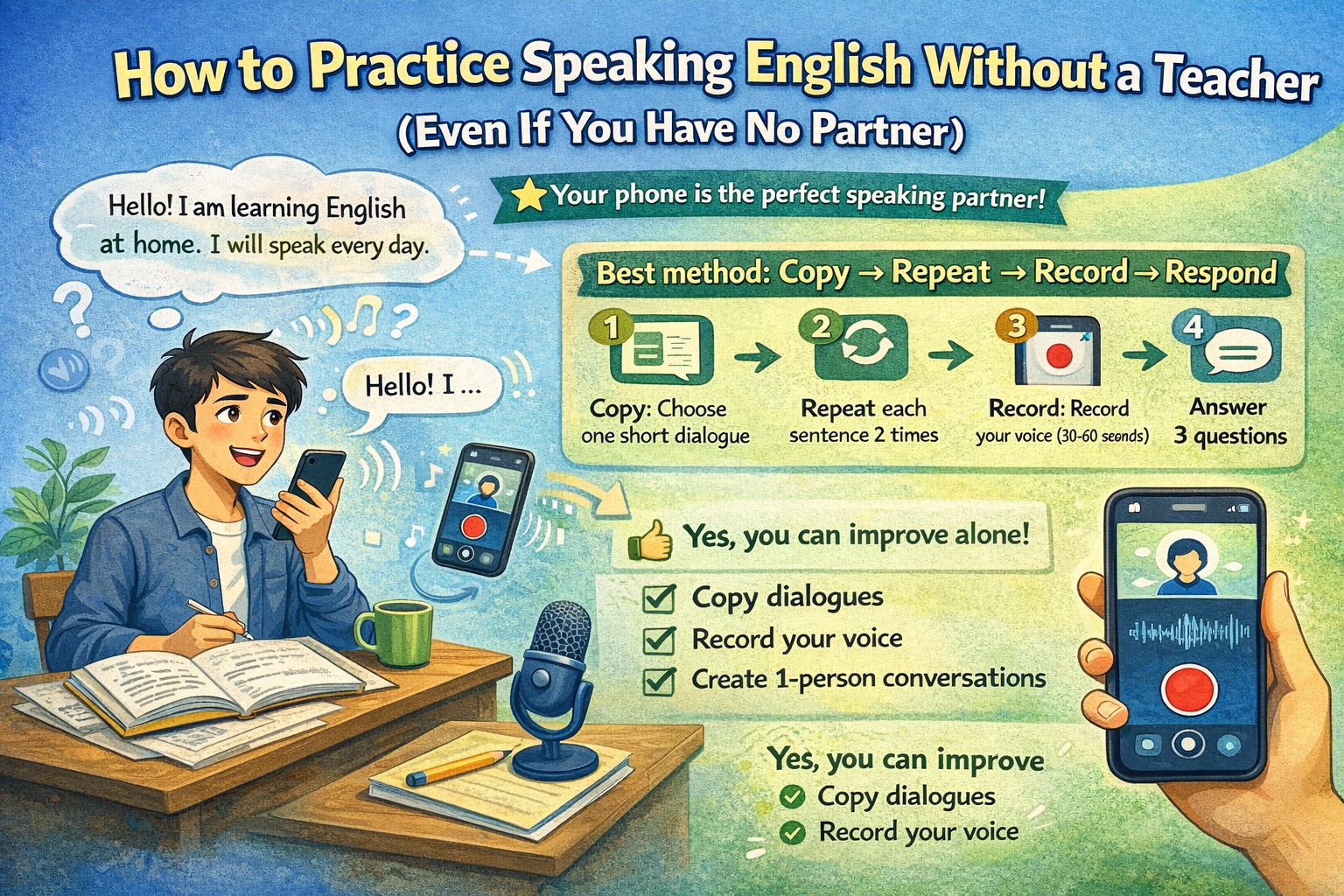
How to Practice Speaking English Without a Teacher
Do you need a teacher to practice speaking English?
A teacher can help, but you can still start improving your speaking without one. Many learners wait too long because they think, “I need a teacher first,” or “I need a native speaker to correct me.”
The truth is simpler: you need a speaking system. If you practice the right way every day, your confidence can grow step by step.
Why speaking feels harder than reading or grammar
Speaking is difficult because you must think and respond quickly. When you read, you can go slowly. When you write, you can edit. But when you speak, you need to choose words, build a sentence, and say it aloud.
That is why many learners understand grammar but still freeze when they try to speak.
This does not mean you are bad at English. It means you need more speaking practice in a safe and simple way.
You are missing a system, not just a teacher
A good speaking system includes five steps:
- Listen to a short model sentence.
- Repeat the sentence aloud.
- Change one or two words to make it your own.
- Answer a simple question.
- Record your voice and listen again.
This system helps you move from passive learning to active speaking.
Start with short sentences
You do not need long sentences at the beginning. Start with useful patterns:
- My name is ____.
- I am from ____.
- I work in ____.
- I like ____.
- I want to improve my English.
If these sentences feel difficult, begin with the free A1 beginner lesson. It gives you a simple model for greeting people and introducing yourself.
These sentences are simple, but they train your mouth and brain to work together.
Use “copy, change, speak” practice
This method is easy for beginners.
Copy: I am from Vietnam.
Change: I am from Japan.
Speak: I am from ____. Nice to meet you.
You can do this with many sentences. First, copy the model. Then change the words. Then say your own answer aloud.
Practice with your phone
Your phone can help you practice when you do not have a teacher or partner.
Try this:
- Choose one short speaking topic.
- Write three simple sentences.
- Record your voice for 20–30 seconds.
- Listen again.
- Repeat and make it clearer.
Do not worry if your first recording sounds strange. That is normal. The goal is progress, not perfection.
Use Aria for guided speaking practice
Inside selected Vumazon lessons, you can practice short speaking steps with Aria. This helps you answer simple questions, repeat useful sentences, and build confidence in a friendly way.
If you want a full direction before choosing a lesson, start with the free placement test. You can also review the clear English learning path to understand how each level builds your skills step by step.
You can practice at home, repeat as many times as you need, and move step by step.
A 10-minute speaking routine
Use this routine every day for one week:
- Listen to one short dialogue.
- Repeat five sentences aloud.
- Answer three simple questions.
- Record your voice for 30 seconds.
- Repeat the same topic tomorrow.
If you do this consistently, your speaking will feel less scary. You will start to remember phrases faster and speak with more confidence.
Start speaking today
You do not need to wait for perfect grammar. You do not need to wait for a teacher. You can begin with one short sentence today.
Say this aloud three times:
Hello. My name is ____. I am learning English. Nice to meet you.
Next step: Try a free beginner lesson and practice short speaking steps with Aria.
Helpful reference
For more general English practice activities, you can explore Cambridge English activities for learners.
Next step: Try the free A1 beginner lesson and practice short speaking steps with Aria.
